How Sensor Trash Cans Detect Motion and Stop False Opens
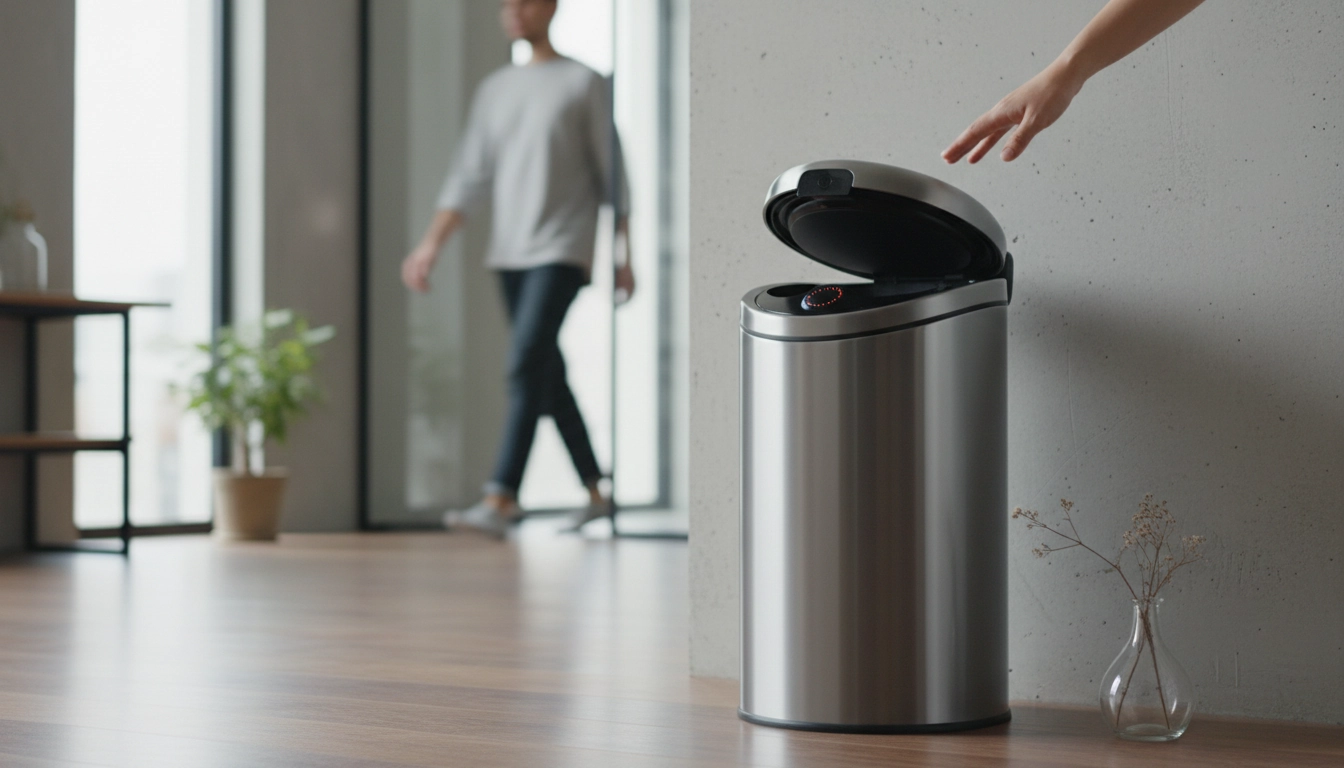
How do induction sensor trash cans detect motion and avoid false triggers?
Most “induction sensor” trash cans use an infrared (IR) motion system: an IR emitter sends out invisible light, and a receiver measures changes in the reflected signal. When a hand approaches the lid area, the reflection pattern shifts quickly and strongly, which the control board interprets as a valid “open” event. Some models also add proximity/ambient filtering so they react to near-field movement (like a hand hovering a few inches away) rather than general room activity.
To reduce false triggers, manufacturers tune both hardware placement and software logic. The sensor window is angled and recessed to narrow the detection cone, keeping it focused on the approach zone above the lid instead of scanning the whole kitchen. Inside, the firmware looks for a short, consistent burst of signal change—often requiring the movement to happen within a certain distance range and time window—before activating the motor. This helps ignore slow background shifts such as shadows drifting, sunlight changes, or people walking across the room.
Many cans also rely on “debounce” and lockout timing. After a valid trigger and lid open, the sensor may briefly pause detection so the lid doesn’t re-trigger while it’s already moving. Some units add a “stay-open” timer that keeps the lid open only when motion remains close and centered; once movement leaves the target zone, the lid closes after a delay to prevent rapid open-close cycling.
Environmental factors matter, too. Bright direct sunlight can saturate IR receivers, glossy surfaces can cause stray reflections, and nearby appliances can introduce electrical noise. Better designs counter this with better shielding, darker sensor lenses, improved filtering on the circuit, and smarter thresholds that adapt to ambient conditions. For deeper technical detail and practical tips, see the full guide here: https://daryne.com/how-do-induction-sensor-trash-cans-detect-motion-and-avoid-false-triggers/.
FAQ
Why does my sensor trash can open by itself sometimes?
False opens are usually caused by strong sunlight, reflective surfaces, or the can facing high-traffic areas. Repositioning the can, cleaning the sensor window, and avoiding direct sun often reduces random triggers.















Leave a comment