Nightmares or Night Terrors? A Parent Response Guide

What is the difference between a toddler nightmare and a night terror, and how should parents respond differently?
Toddler nightmares and night terrors can both be upsetting, but they come from different sleep stages and need different parent responses. A nightmare is a bad dream that happens during lighter sleep (often later in the night). A night terror is a sudden episode from deep sleep (often earlier in the night) where a child may scream, look panicked, or thrash—yet isn’t fully awake.
How to tell them apart
Toddler nightmare signs
Your child wakes up, looks alert, and can usually be comforted. They may describe a scary dream or cling to you, and they often remember at least part of it the next day.
Night terror signs
Your child may sit up, cry or scream, breathe fast, sweat, or seem frightened—but their eyes can look “open” without really seeing you. Comforting may not work, they may push you away, and they typically have no memory of the episode in the morning.
How parents should respond
When it’s a nightmare
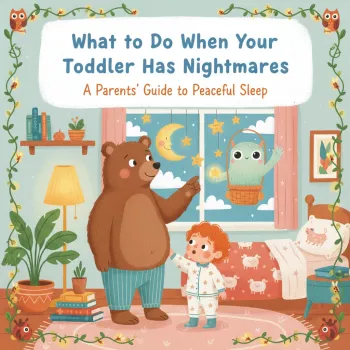
Go to your toddler, offer calm reassurance, and help them feel safe. Keep lights low, use a steady voice, and guide them back to bed with a predictable routine (quick cuddle, sip of water, brief reassurance). If nightmares become frequent, consider adjusting bedtime habits and stressors; more ideas are in this toddler nightmare comfort plan.
When it’s a night terror
Focus on safety and let it pass. Don’t try to fully wake your child; it can prolong the episode. Gently block kicking or climbing, guide them away from hazards, and stay nearby until breathing and movement settle. Afterward, help them lie back down without a big discussion. If episodes are frequent, track timing—some families find that a brief “scheduled awakening” 15–30 minutes before the usual event reduces them (ask your pediatrician first).
FAQ
When should I call the pediatrician about my toddler’s sleep?
Call if episodes are frequent, lead to injury, come with snoring or breathing pauses, or if daytime behavior and mood are worsening. Also reach out if you’re unsure whether it’s nightmares, night terrors, seizures, or another sleep issue.














Leave a comment